
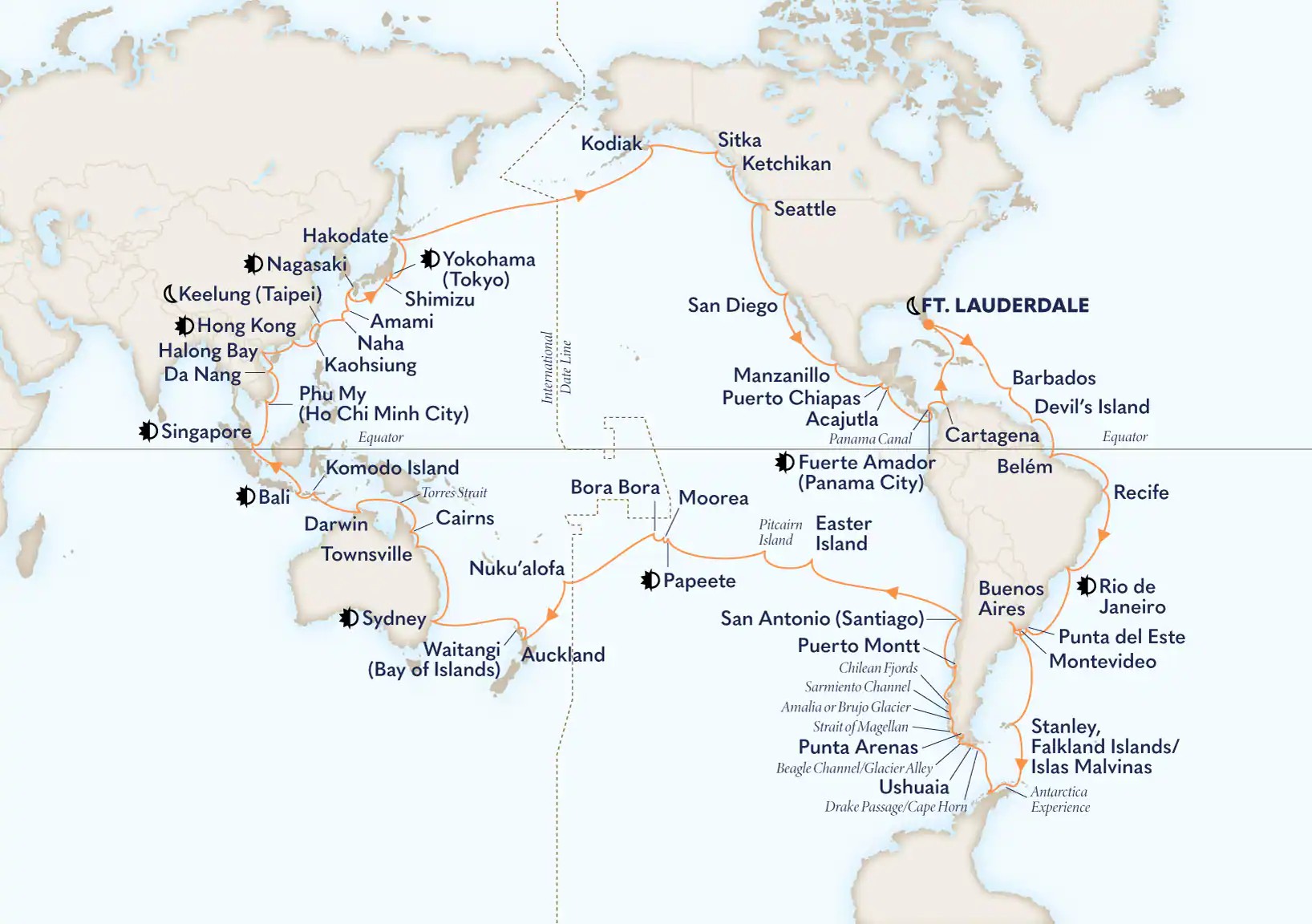
Valencia, Spain: Paella Class, Old Town Stroll, and “Radio Waves” at Sea
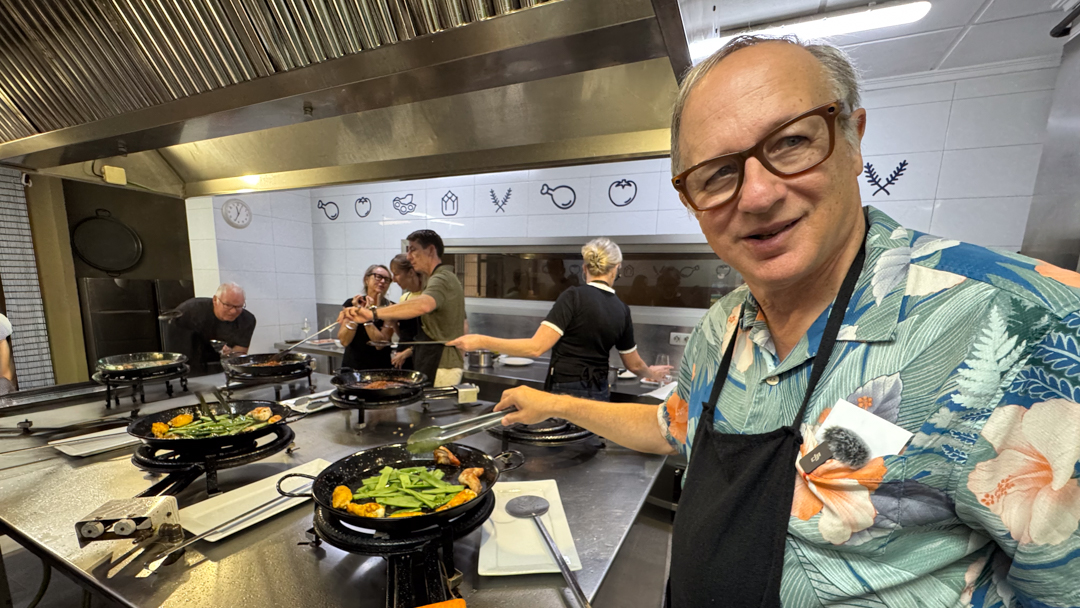
We cooked authentic Valencian paella, wandered through the old town’s grand squares, and ended the day onboard with a nostalgic “Radio Waves” show.
Valencia, Spain: Paella Class, Old Town Stroll, and “Radio Waves” at Sea
Making Traditional Valencian Paella
We arrived in Valencia before sunrise, gliding quietly into port under a pale morning sky. Valencia is Spain’s third-largest city, with a metropolitan area of over a million people. The port is conveniently close to the city, though the main historic center lies about four miles inland. The ship offered a shuttle bus for $18 round trip, but we opted for taxis instead—€15 for the trip into town and €12 for the return, with a small surcharge for pickups at the terminal.Today we decided to take the Sea Saffron Tours – (more HERE) Paella Cooking Class for €65 per person, which meets near the Valencia Cathedral.
-
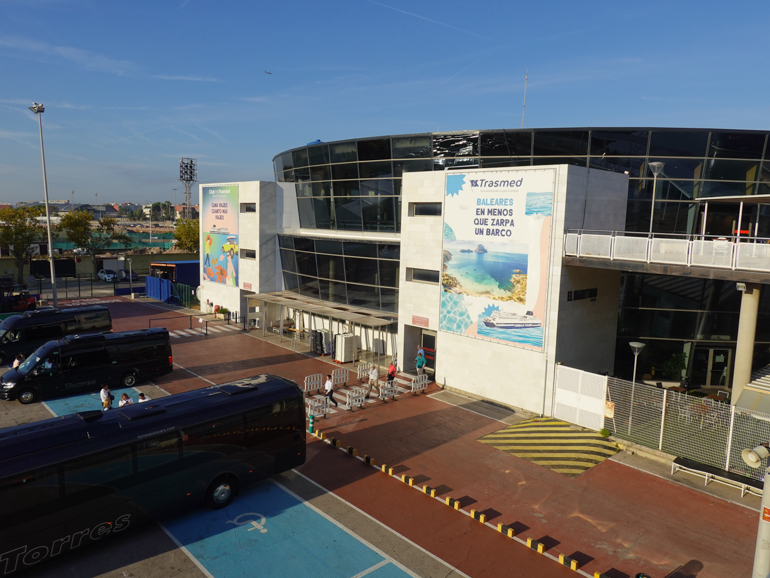
- Back of Cruise Terminal where excursions and shuttle buses depart
-
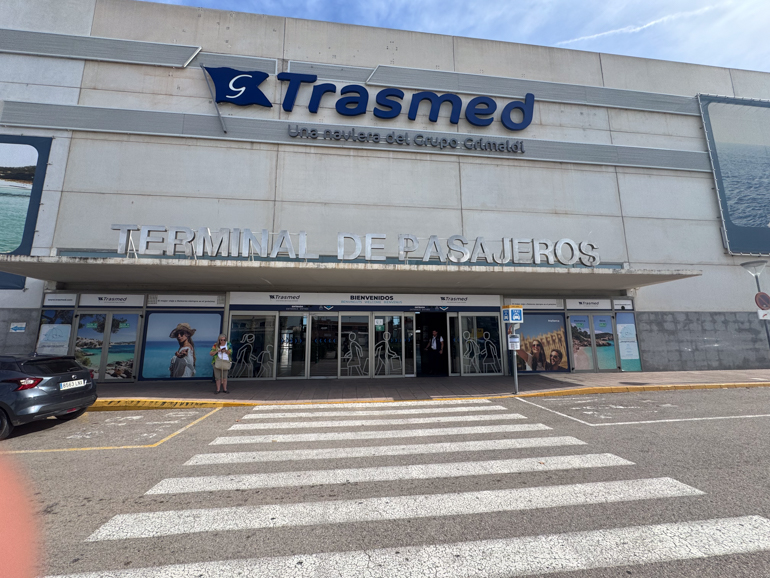
- Cruise Terminal Main Entrance
As we left the ship, a long line of taxis was already waiting at the terminal entrance. Our driver warned that he couldn’t reach our meeting point at Plaza Manises, in front of the Hotel Palau Vallier, because several streets were closed for a major charity event—Valencia Contra el Cáncer, a citywide foot race, walk, and skating event organized by the Asociación Española Contra el Cáncer (AECC). The event draws thousands each year and raises funds for cancer research, filling the city’s boulevards with runners, volunteers, and cheering spectators.
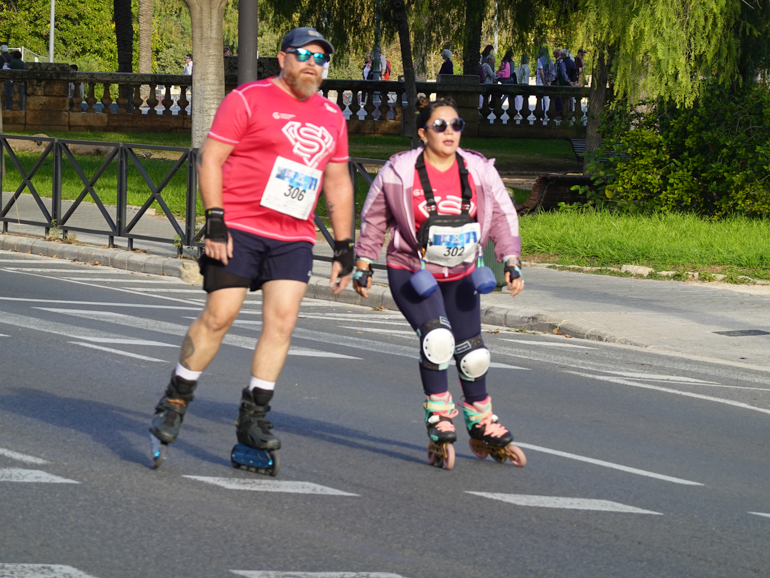
He dropped us off near the Pont de Fusta bridge, about half a mile from our destination. From there, we walked across the broad Jardín del Turia, a long green park that snakes through the city where a river once flowed. It was a beautiful morning—warm, breezy, and filled with people skating, biking, and walking dogs. We paused to watch a group of rollerbladers glide past before continuing into the heart of the old town.
-
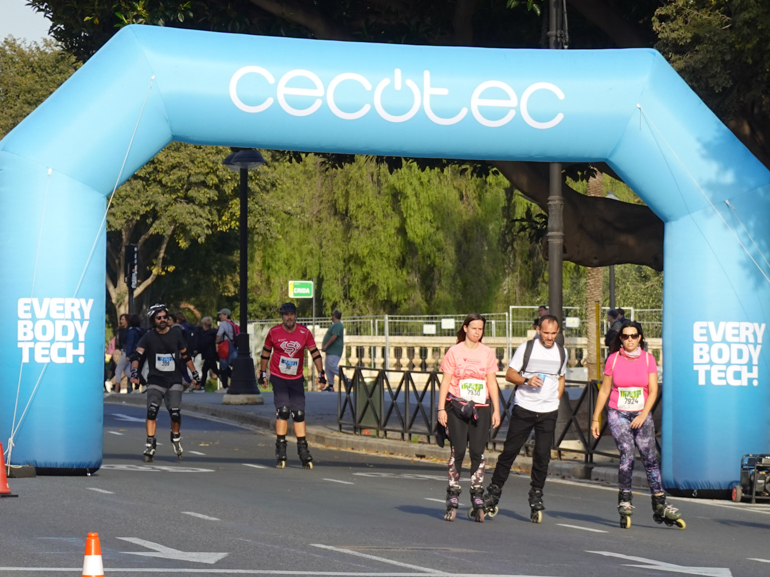
- There were rollerbladers, runners and walkers enjoying the beautiful weather
We reached Plaza Manises around 10:20 AM, ten minutes ahead of schedule. Our host, Reyes, arrived promptly at 10:30 and greeted our group of twelve. After brief introductions, she led us a short distance down a narrow side street to a discreet door that opened into a combined teaching kitchen and dining area—our classroom for the morning.
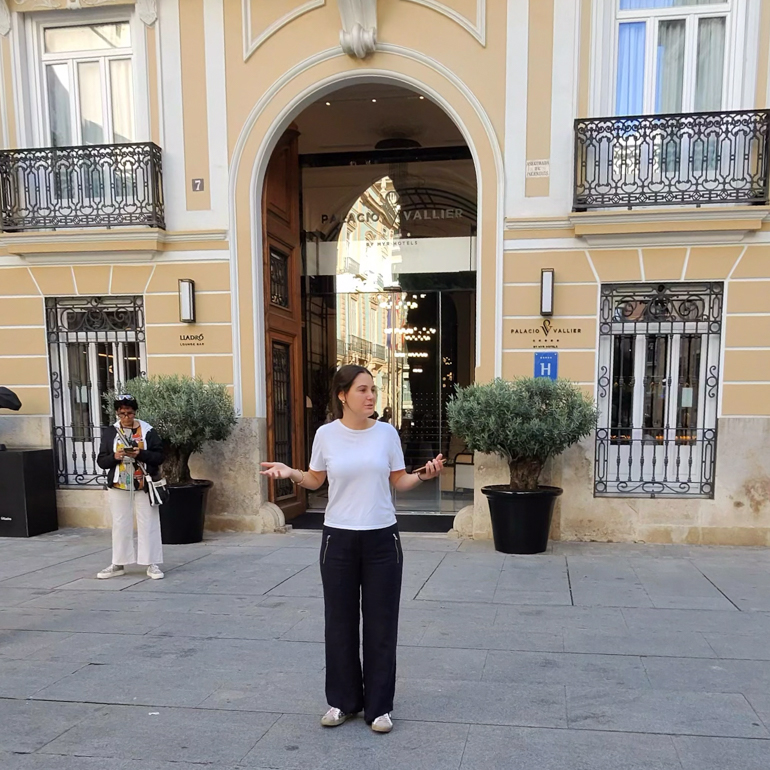
Reyes, from Sea Saffron, met us in Plaza Manises in front of the Hotel Palau Vallier
Welcome and Wine
Inside, we met Ian, Reyes’s assistant, who welcomed us with sparkling wine, local cheese, and nuts as we gathered around a long high-top table. He described the four Valencian wines we would taste throughout the class. After a few minutes of chatting and toasting, Reyes announced that everything was ready in the kitchen.
-
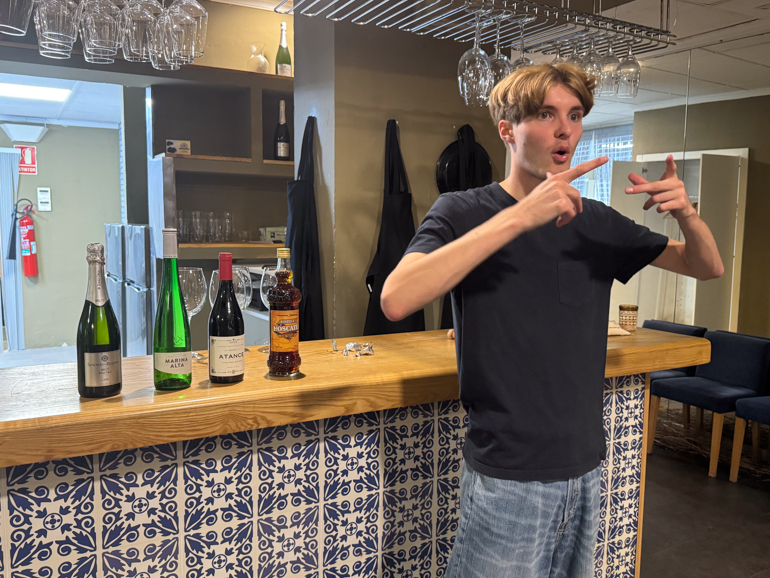
- Ian, from Sea Saffron Tours, explains the wines we will enjoy and outlines what we can expect over the next several hours
-
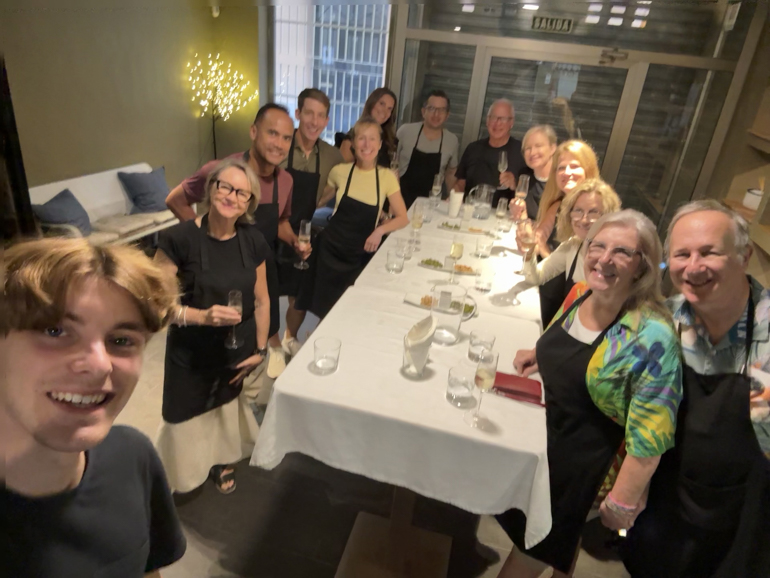
- Our group enjoying our snacks while getting to know each other
Learning About Paella
Reyes began by explaining the cultural significance of paella, which the Valencian government has officially designated as a cultural asset. “Paella is an icon of the Mediterranean diet,” she told us, “because of both its ingredients and its role as a symbol of Valencian culture.” She emphasized that traditional Paella Valenciana follows strict rules: only ten ingredients are permitted—rice, water, olive oil, salt, saffron (or coloring), tomato, flat green beans, lima beans, chicken, and rabbit. “No fish or shellfish,” she reminded us. “Never in a traditional paella!” HERE are the recipes used.
The kitchen was bright and welcoming, centered around a large island fitted with eight paella pans set over gas burners. Most couples shared a pan, and while four groups prepared traditional paella, three others—including a solo traveler—opted for the seafood version. Reyes and Ian had prepped all the ingredients, so we could focus on the cooking itself.
-
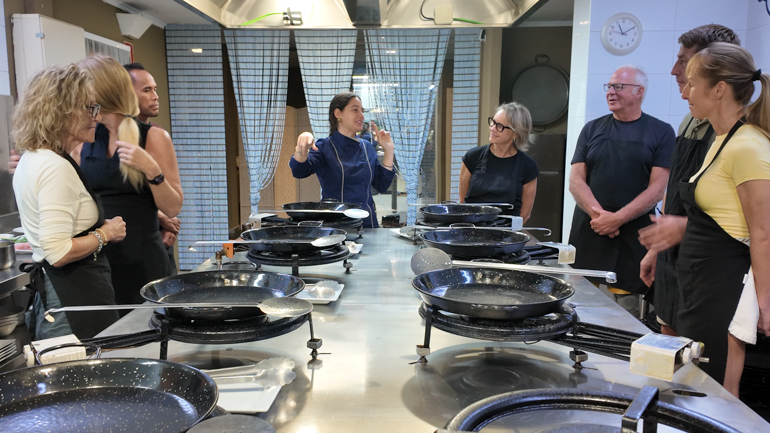
- Reyes explains the various types of Paella: Traditional, Seafood and Vegetarian
-
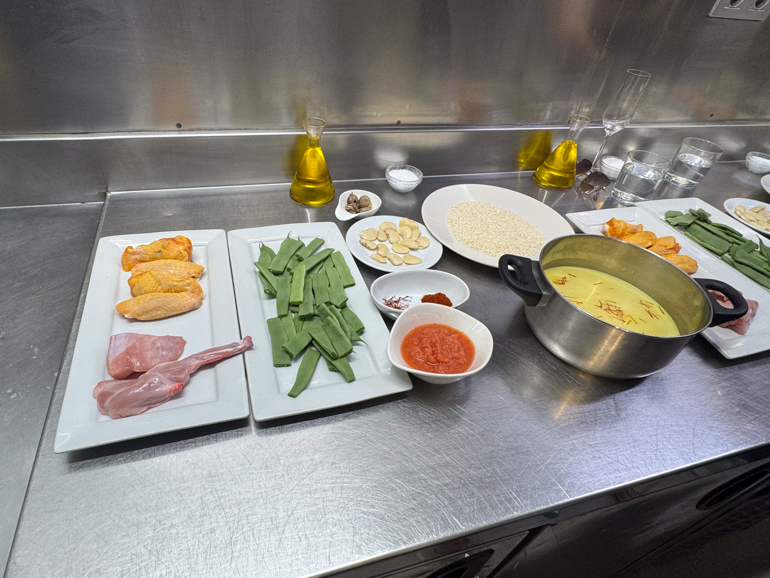
- The ingredients for our traditional Paella were ready for us when we arrived
-
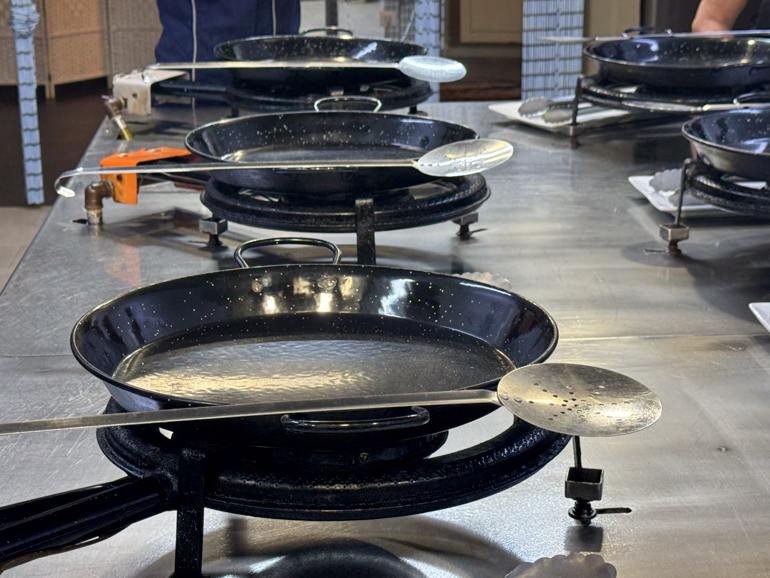
- Paella pan and double ring gas burners
Cooking the Paella
We began by heating olive oil in the center of the pan. Once it shimmered, we added the pieces of chicken and rabbit, browning them on both sides before pushing them to the edges to continue cooking slowly. Next came the flat green beans and lima beans, sautéed in the center until slightly golden. We then stirred in grated tomato, a touch of smoked paprika, and saffron, mixing quickly so the spices wouldn’t burn. When the mixture bubbled, we added the stock and let it simmer for a few minutes to blend the flavors.
Finally, we poured in the rice, spreading it evenly across the pan. That’s when Reyes gave her most important instruction—spoken with great emphasis: “After two minutes… do not touch the rice! Don’t stir it!” She repeated it several times, smiling as she moved from pan to pan to make sure everyone resisted the urge to stir.
As the paella cooked, the kitchen filled with a wonderful aroma of toasted rice and saffron. Reyes circulated constantly, offering gentle corrections and encouragement as we moved through each stage. Unlike many cooking classes that are mostly demonstrations, this one was completely hands-on—we did nearly all the cooking ourselves.
After about 15 minutes of simmering, the liquid reduced, and the rice began to form its signature crust at the bottom of the pan. The scent was irresistible.
-
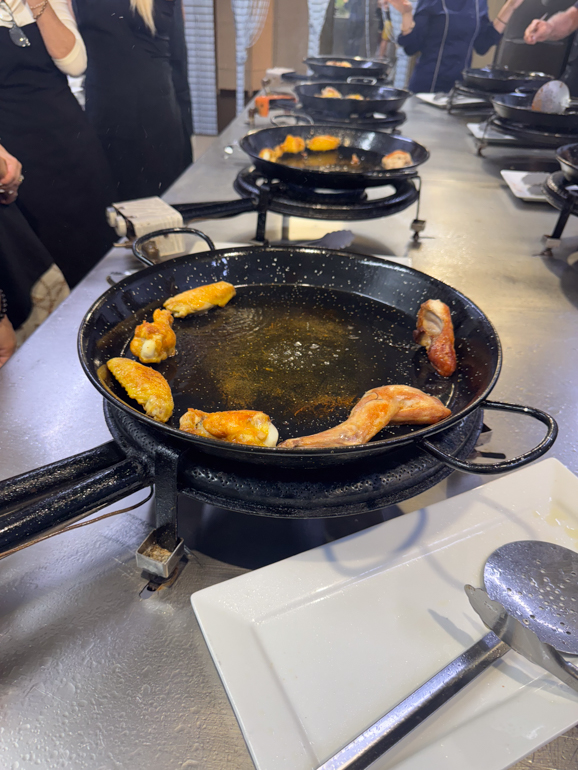
- Move the meat to the sides to avoid over cooking
-
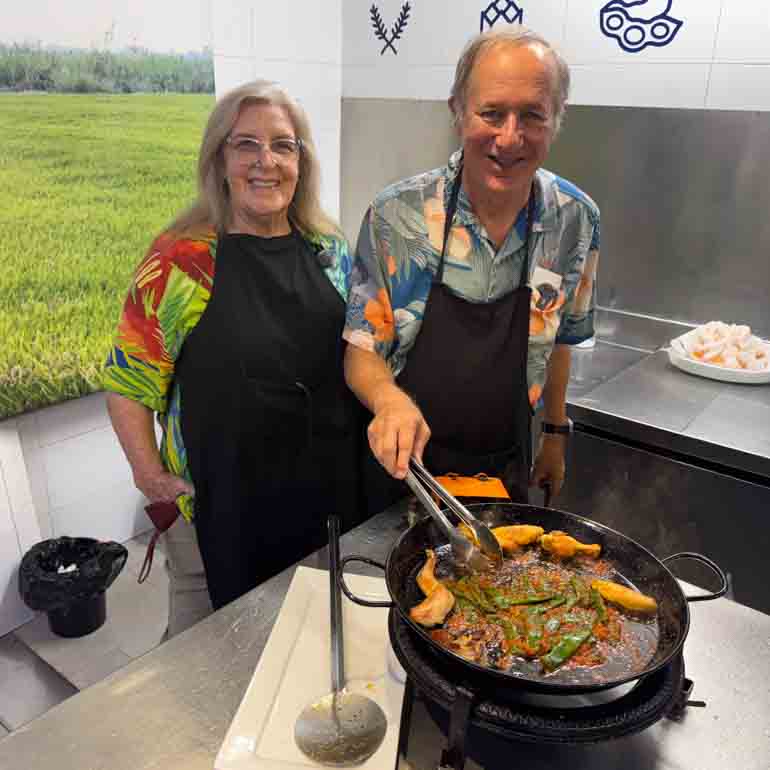
- Frying the vegetables
-
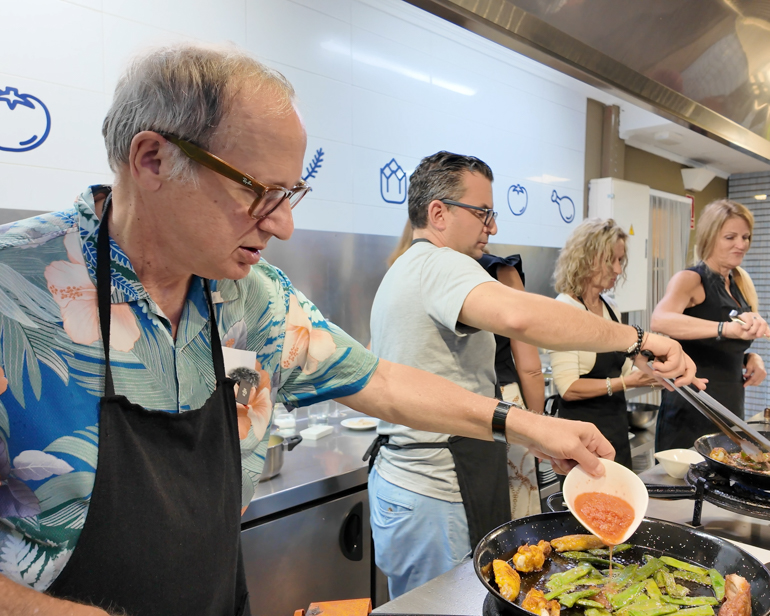
- Adding the tomato
-
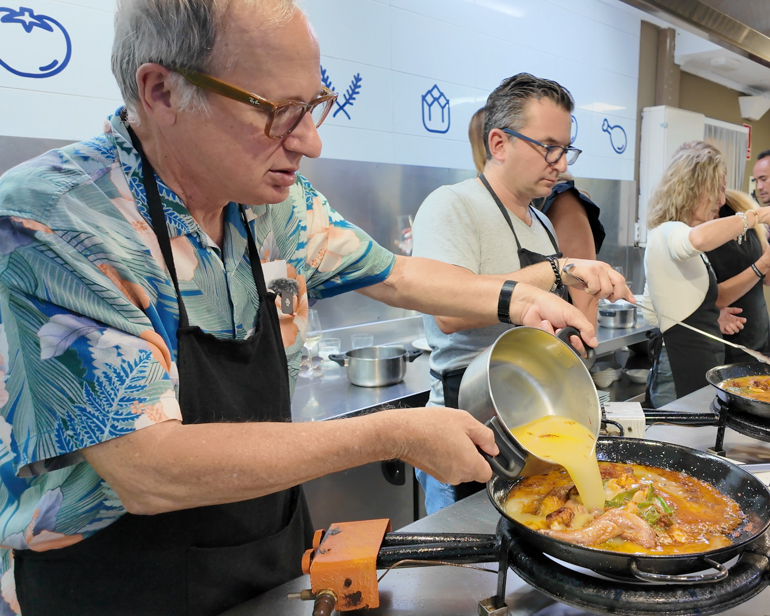
- Adding the stock
-
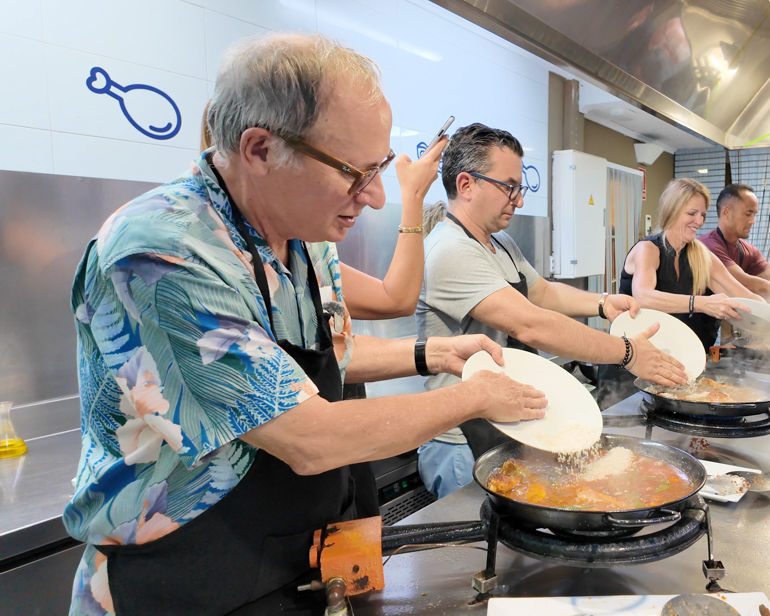
- Adding the rice
-
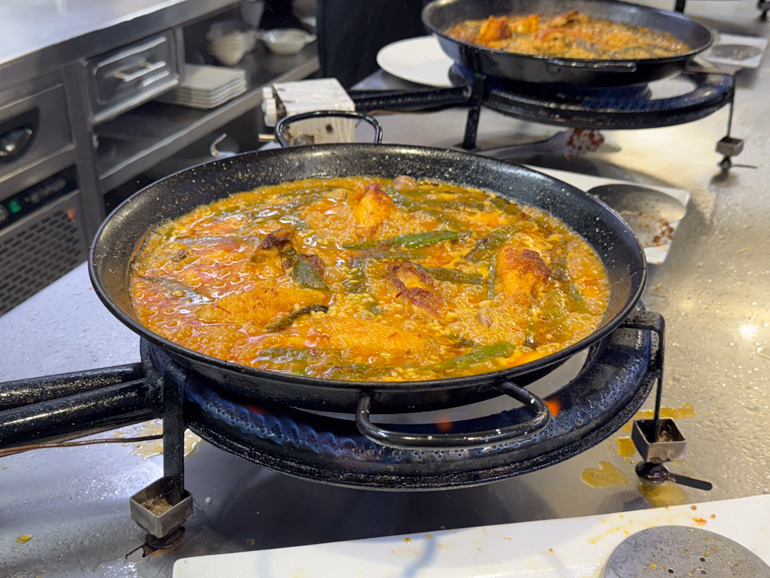
- Boiling for 12 minutes
-
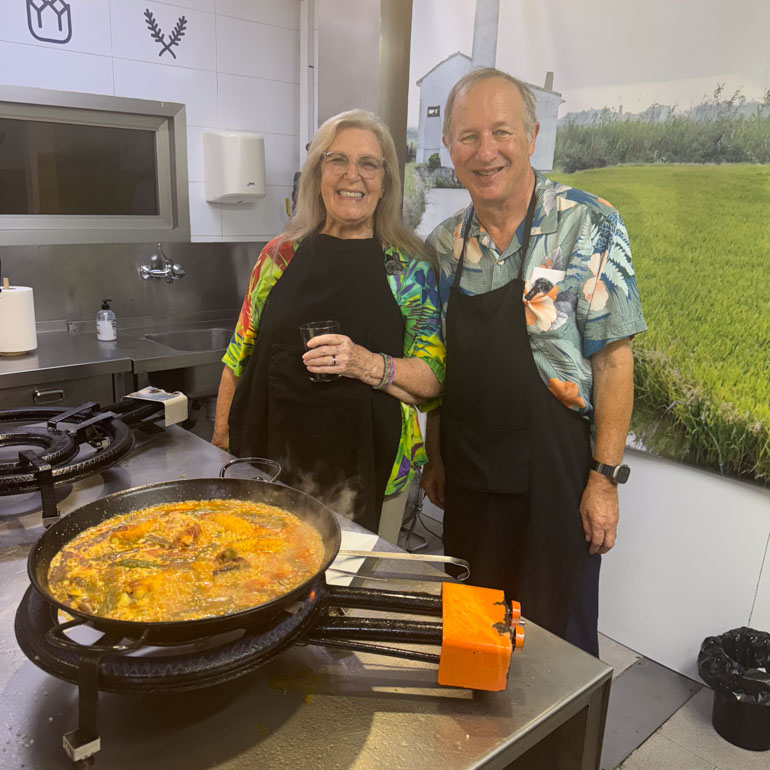
- Finished!
The Best Part — Lunch!
When our paellas were nearly done, we moved to a long dining table to enjoy another glass of wine while Reyes and Ian finished the final steps. A few minutes later, each couple received their finished paella, still sizzling in the pan. We were invited to eat directly from the pan, just as Valencians do.
At first, we avoided scraping the crispy layer at the bottom, but Reyes laughed and insisted we try it. “That’s the best part,” she said. “The socarrat! My brothers and sisters would fight over it when we were children.” She was right—the crunchy caramelized rice was delicious.
After the main course, we were served a traditional Valencian dessert, a light and sweet coca sponge cake, which was the perfect finish to the meal.
We lingered at the table with our new friends, chatting and sipping wine. We sat near Oliver from Tahiti and Nancy from Maryland, who were both delightful company. Oliver, staying in Valencia for a few extra days, happily took the leftover paella home to enjoy later.
The entire experience, offered by Sea Saffron, was exceptional—warm, authentic, and beautifully organized. Highly recommended for anyone interested in learning about Valencian culture through its most famous dish.
-
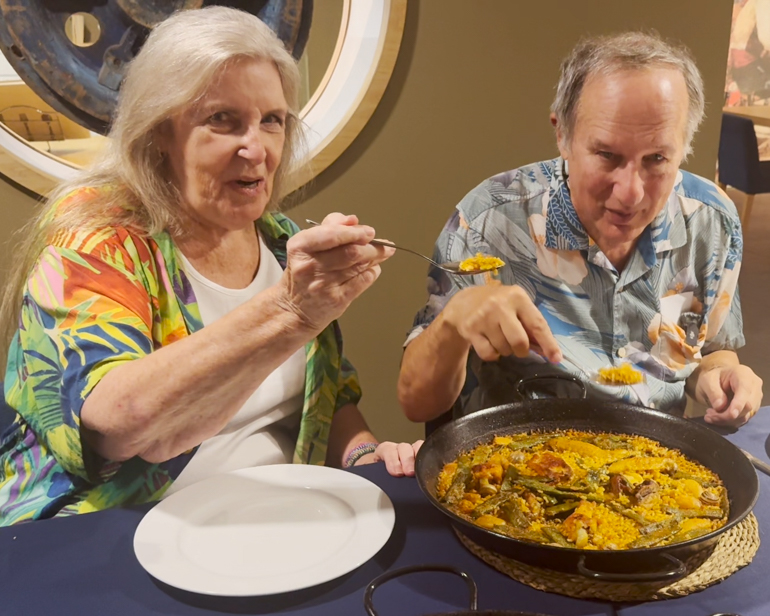
- Reyes said to eat the Paella directly from the pan
-
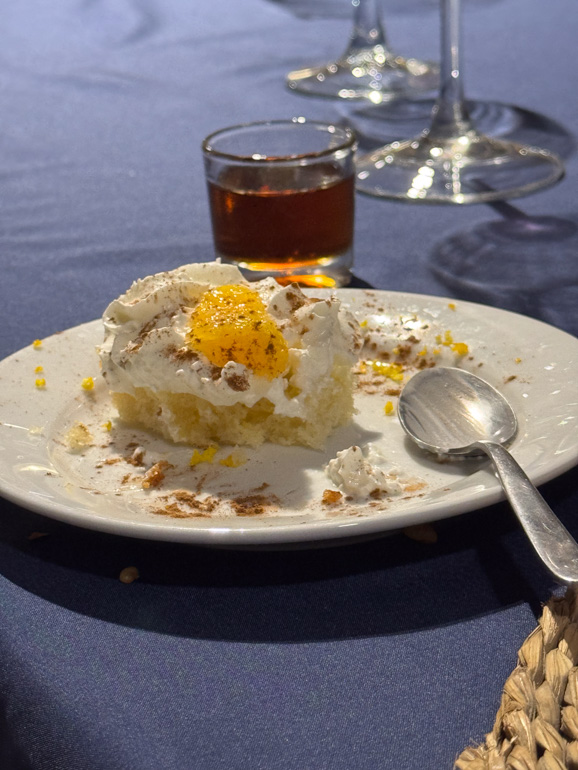
- Coca sponge cake.
Exploring Valencia
As is our custom, we like to start our day’s outing at the point farthest from the ship and gradually work our way back. After the class, we began walking through Valencia’s busy streets, occasionally pausing to browse in souvenir shops. The city felt vibrant and alive, still humming from the morning’s charity race.
Nancy suggested that we stop at the nearby Valencia Cathedral, so we detoured toward Plaza de la Reina, one of the city’s most photogenic squares. The Cathedral, dating from the 13th century, stands at its edge—a striking mix of Gothic, Romanesque, and Baroque architecture, crowned by the Miguelete Bell Tower. The line to enter stretched well around the corner, so we decided to pass this time and continued our walk.
Crossing Plaza de la Reina, we admired the elegant cafés and orange trees that line the square, then made our way to Plaza del Ayuntamiento, Valencia’s grand civic center. The square is surrounded by ornate early 20th-century buildings, the City Hall, and the grand Central Post Office with its clock tower and glass dome. Fountains sparkled in the sunlight as locals gathered on benches and children chased pigeons across the open plaza.
At the far end, we spotted a taxi stand and decided it was time to head back to the port. Our driver reminded us that Valencia has multiple cruise terminals, so it’s important to know which one your ship uses before heading back—good advice to remember for future visits.
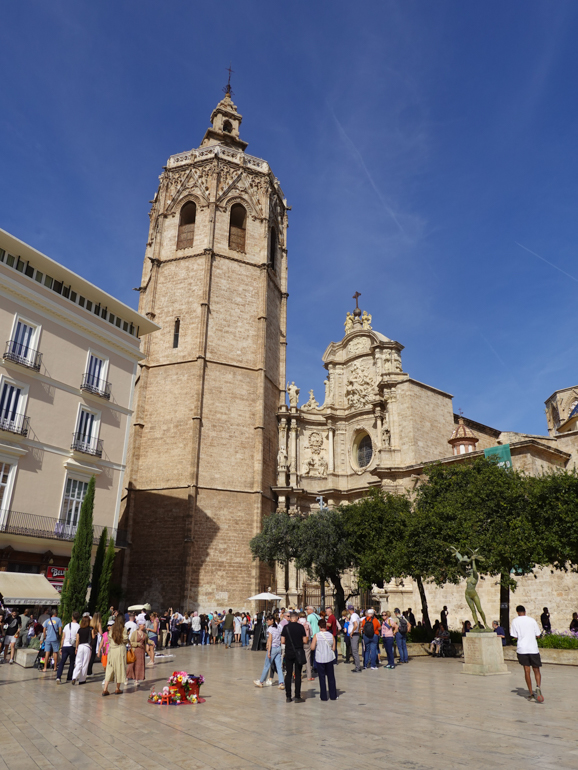
Valencia Cathedral
Back Onboard
Back on the ship, we relaxed and watched the harbor slip into twilight. The evening’s entertainment featured singer Tony K. Irving in his show titled Radio Waves, which turned out to be one of the highlights of the cruise.
Tony’s performance was a nostalgic musical journey back to a time when the radio connected us all. He shared songs that reminded us of high school crushes, first loves, and those special tunes that once said everything we couldn’t. His easy style and humor kept the audience engaged, and by the end, everyone was singing along. It was a warm, feel-good evening that perfectly capped off our memorable day in Valencia. Tony’s website is HERE
-

- Tony K Irving
-

- Tony K Irving
I love the interactive maps you have on each port. I hadn’t seen this done on blogs before and is a great information source. I’ve only been to Spain once and reading this reminds me why it’s near the top of my return trip ideas!
Thanks – another great source for tours is Spain Day Tours. Glad you enjoy the maps.
Thanks for the recommendation of Sea Saffron. We have enjoyed Valencia before & it’s nice to know another choice of excursions.
We had a friend do the Tapas tour and she loved it. They also have a tour where they will pick you up from the port.
My mouth watered just reading your post about the paella. Next time I visit Valencia I’m going to contact Sea Saffron for a class. I did something similar in Rome a few years ago and loved it!
Sea Saffron did a wonderful job
Great post! I especially like the paella experience.
I like to make paella but I don’t use rabbit! Was it good?
Yes – it was very good. Not sure how available rabbit may be in the USA – but I have never really looked for it either.
Thanks! Glad you enjoyed it