
A Windy Walk Around Punta del Este: Lighthouse, La Mano, and the Edge of the Peninsula
A windy, walkable day in Punta del Este: a lighthouse from 1860, the little church beside it, and the famous La Mano sculpture — plus practical tips for future cruisers on timing, money, and getting around.
Windy Walk Around Punta del Este: Lighthouse, La Mano, and the Edge of the Peninsula
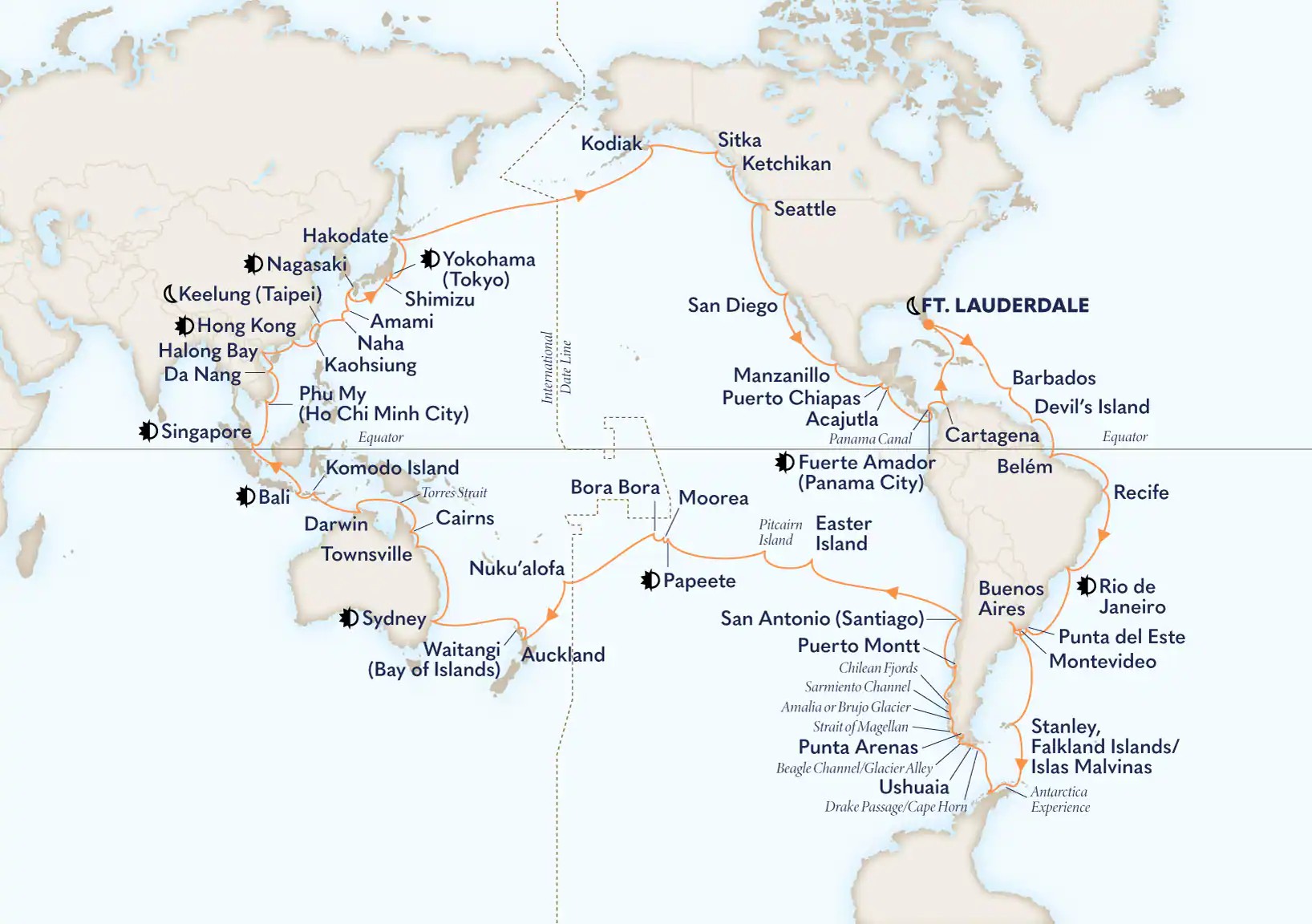
22 Jan 2026. The Volendam anchored off Punta del Este, Uruguay, before 8 am, and we were cleared soon afterwards. We didn’t have any specific plans and decided to walk around the peninsula and explore the city on foot. Our route is highlighted in red on the map below. The weather was forecast to be windy, but otherwise nice.
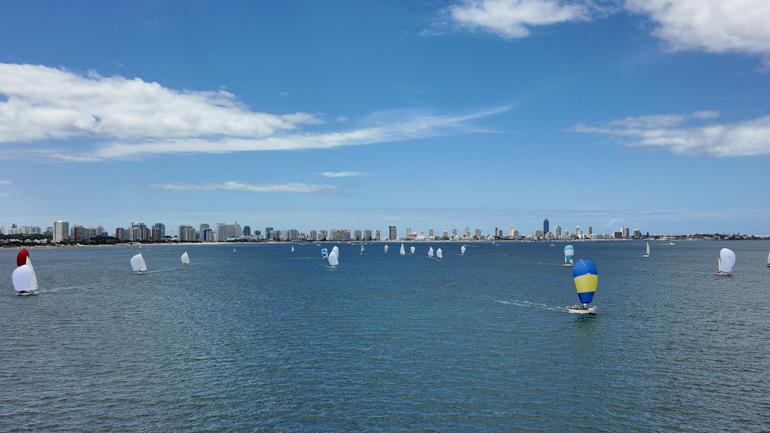
Numerous sailboats enjoyed the clear skies and brisk winds
Tendering began soon after 8 am, and by 9:45 am, open tendering was announced. We left the ship around noon and were ashore around 12:30 pm. The tender ride was 18 minutes.
From the tender landing, we turned right and began walking along the coast, following the curve of the peninsula with the wind at our backs. The walk itself was the point – open sky, crashing surf, and the sense that Punta del Este is as much about its edges as its beaches.
-
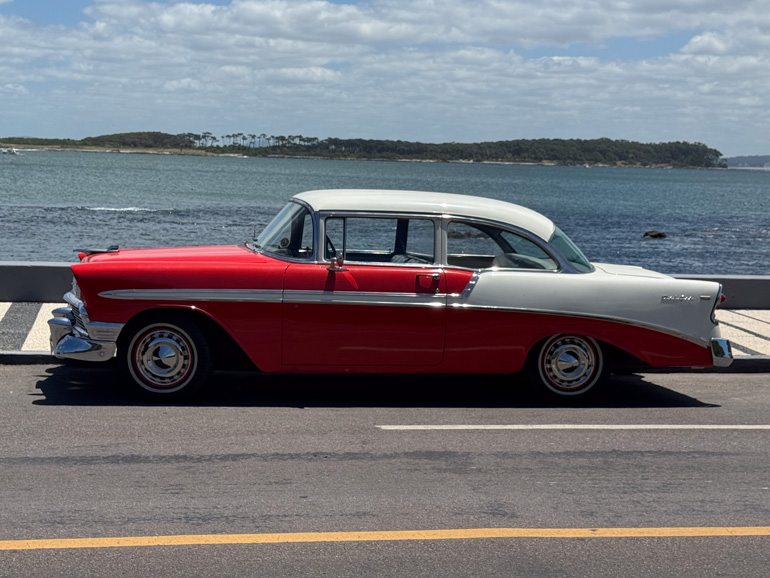
- 1956 Chevy Belair
-
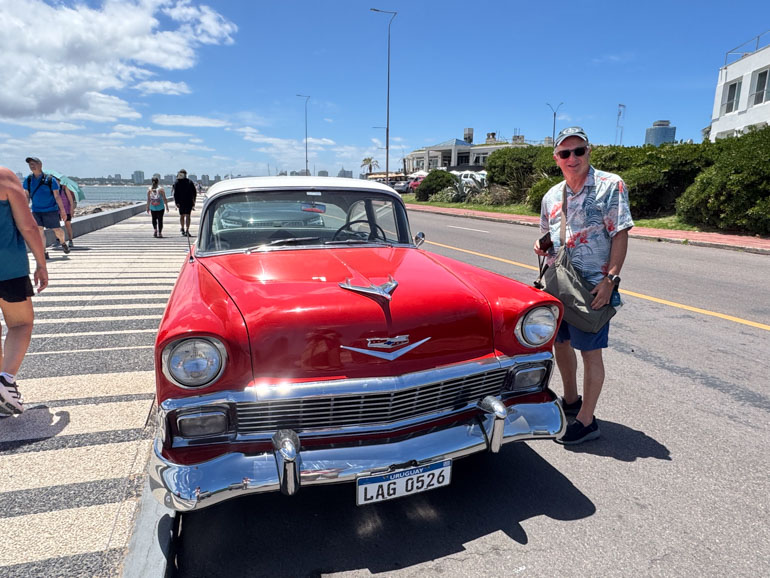
- Classic Car!
The Lighthouse and the Church Beside It
Just after 1:00 pm, we reached the Punta del Este Lighthouse, which has stood watch over the peninsula since 1860. It’s still an active lighthouse, its white tower rising above the rocky headland, marking the meeting point of the Río de la Plata and the Atlantic Ocean.
Adjacent to the lighthouse is the small but striking Iglesia Nuestra Señora de la Candelaria. This modest church dates back to the late 19th century and adds a quiet historical presence to the area. The setting – lighthouse, church, open water – makes this corner of the peninsula feel grounded and timeless.
-
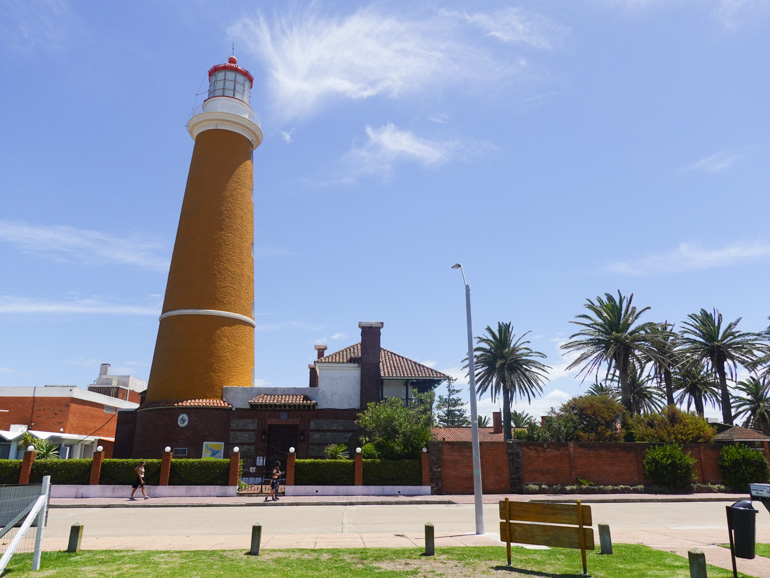
- Punta del Este Lighthouse
-
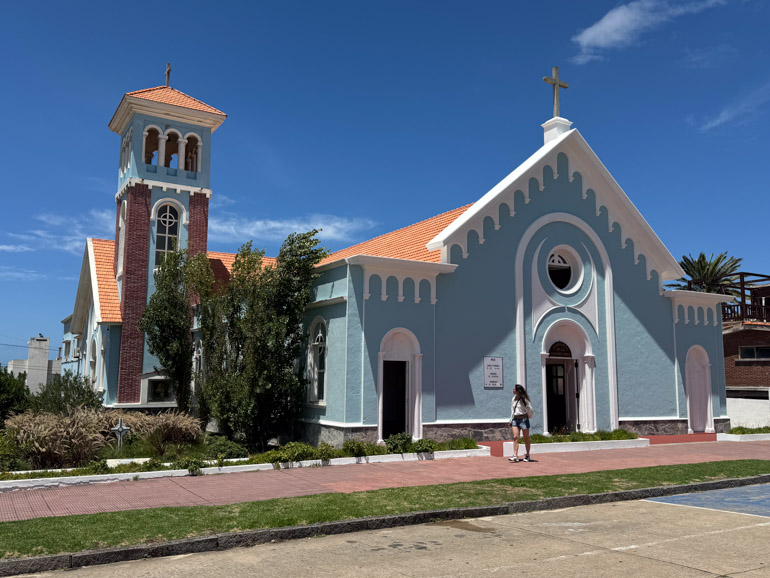
- Iglesia Nuestra Señora de la Candelaria.
-
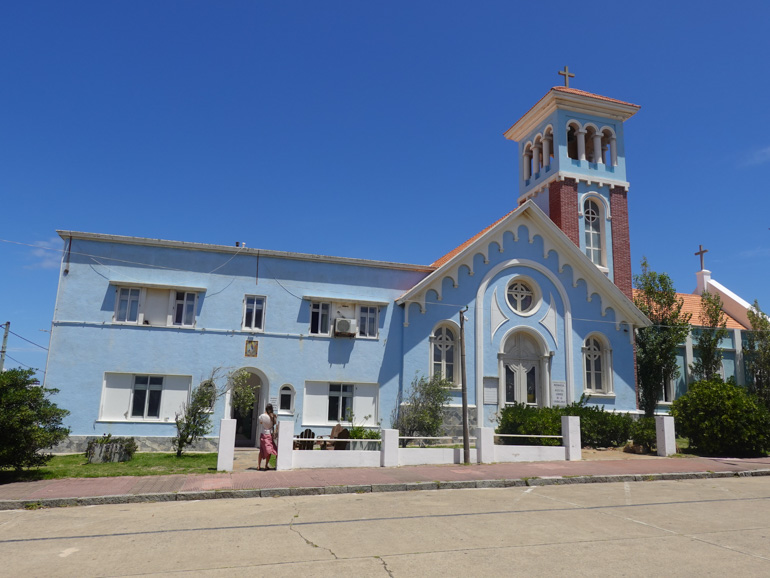
- Another view of Iglesia Nuestra Señora de la Candelaria.
-
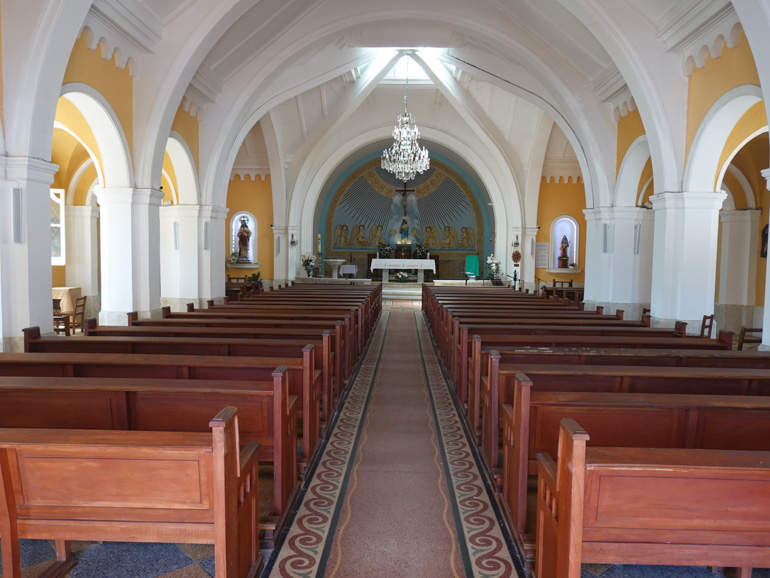
- Inside the Church
Walking Toward La Mano
From the lighthouse area, we continued along the windward side of the peninsula, where the breeze was stronger and the Atlantic more forceful. There were several small beaches along the way, but the strong wind kept many people from enjoying a day in the sun. There is a large beach, La Brava, in front of Los Dedos
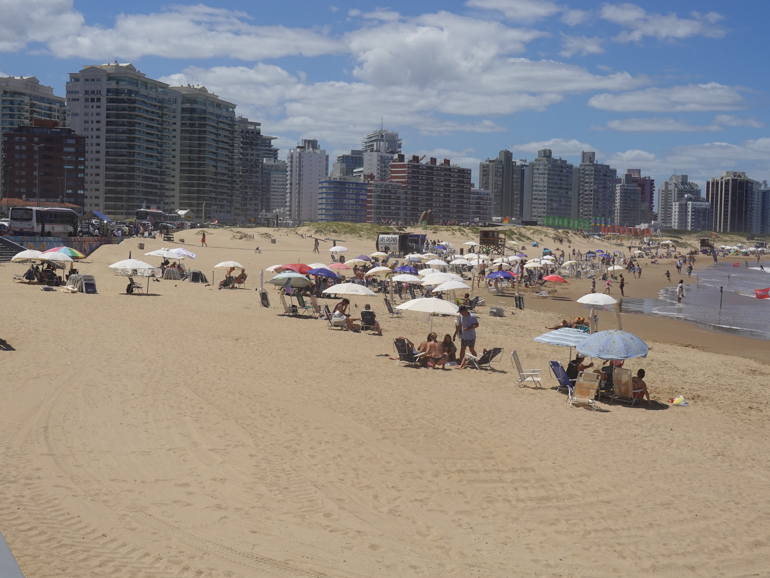
This is the beach in front of “The Hand” – La Brava Beach
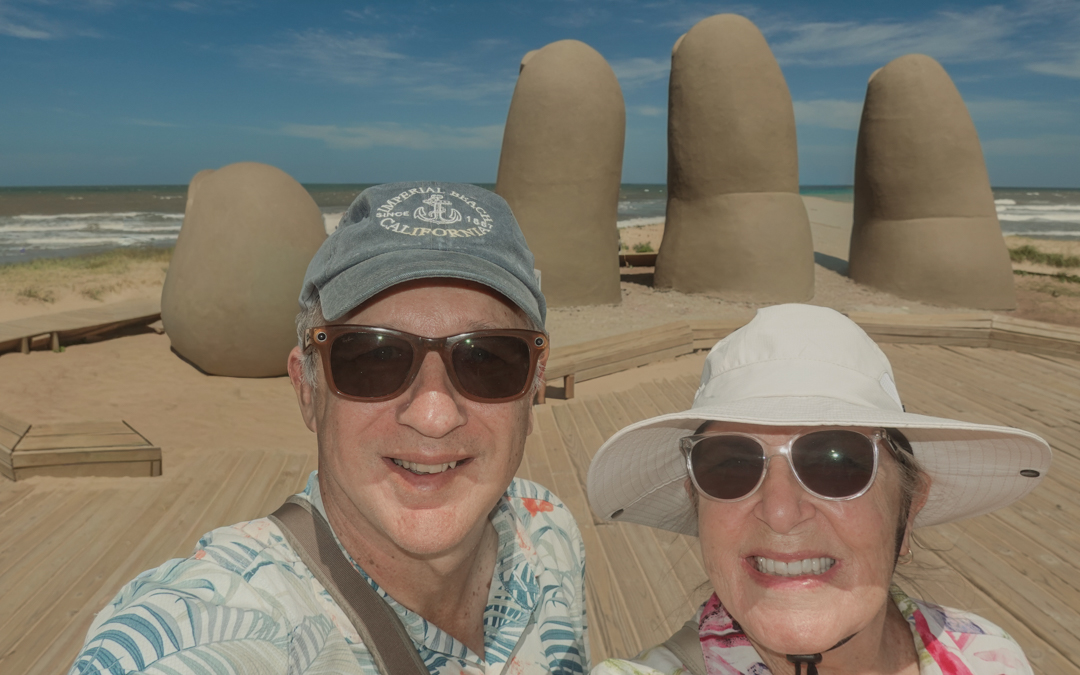
At 2:08 pm, we reached La Mano, also known as Los Dedos or The Hand. The massive fingers emerge from the sand as if the beach itself is alive.
Created in 1982 by Chilean sculptor Mario Irarrázabal for an international art festival, the sculpture is often interpreted as a warning – human vulnerability in the face of nature’s power, or a reminder to respect the sea. Irarrázabal is known for similar works worldwide, often depicting parts of the human body partially buried or emerging, reinforcing themes of fragility, survival, and scale.
-
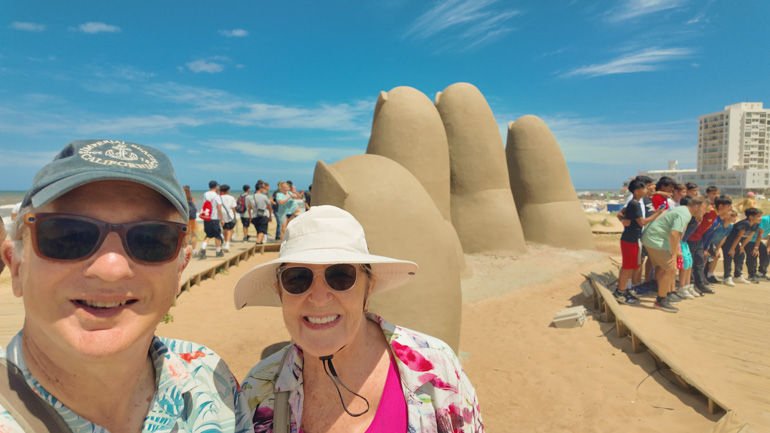
- Los Dedos or The Hand was filled with tourists
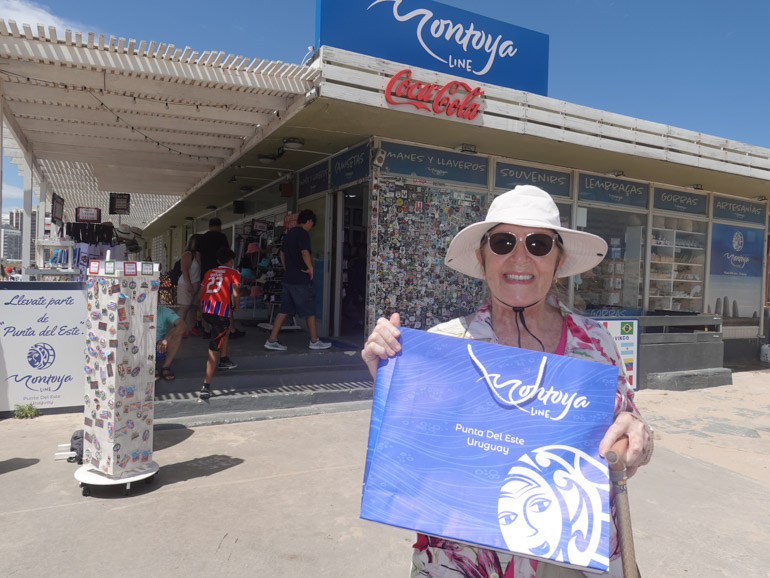
A small souvenir stand sits beside the sculpture, and we stopped briefly to pick up a keychain, a couple of chocolates, and a pink Robin Ruth tote.
Around the Peninsula and Back to the Ship
From there, we continued walking, passing by Manos del Uruguay (sadly, no yarn here – only completed garments, yarn is only available in the shop in Montevideo), and then looping around the peninsula. By the time we were done, we had logged almost 4 miles on foot, an easy yet satisfying circuit that offered views of Punta del Este from multiple angles.
The last tender was at 3:30, and we arrived at the pier with 10 minutes to spare. We boarded a local shore-side tender for our ride back to the ship.
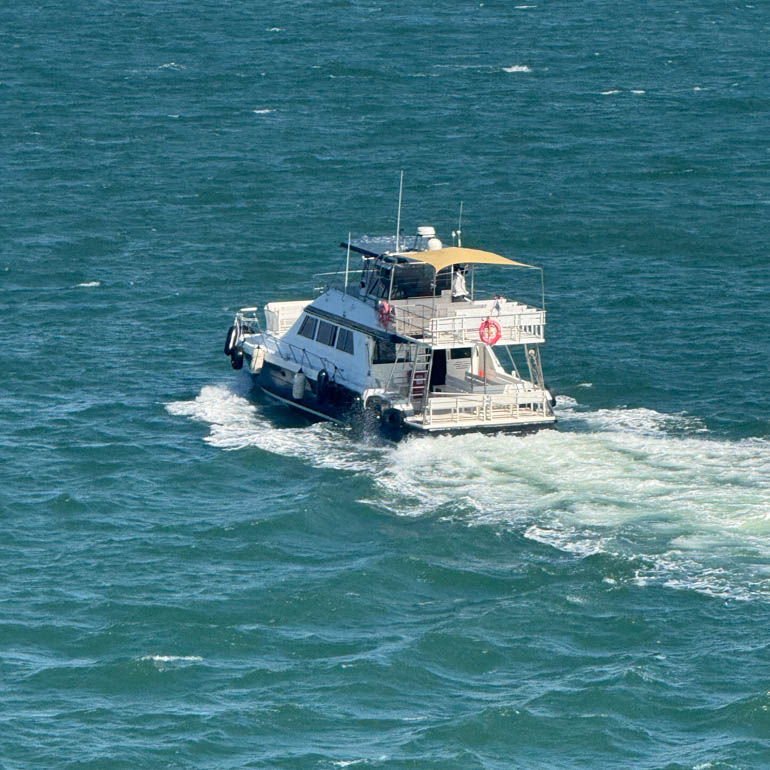
Shore side tender
Marty Thomas rocked the World Stage with his second show.
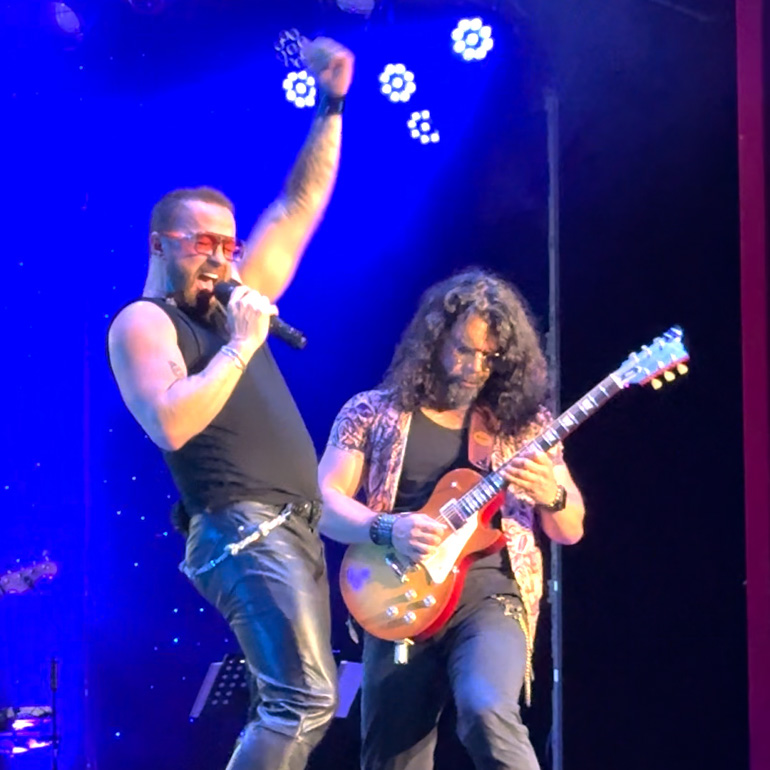
Marty Thomas and Lead Guitarist Alvaro
Planning a Visit to Punta del Este
If you’re visiting Punta del Este on a cruise, here are a few practical notes that may help you plan your day ashore.
Port Basics
- In port typically 8:00 am to 4:00 pm
- Tender port
- Tender landing at La Pastora jetty
- 10-15 minute walk to the main tourist area
It’s a very walkable port. Plaza General Artigas (Artisans’ Square), Gorlero Avenue, the lighthouse, and La Mano are all reachable on foot.
Getting Around
Uber is available and works well for trips to places like Casapueblo in Punta Ballena (about a 15-minute drive away). Taxis are plentiful – confirm the meter is running or agree on the fare beforehand.
Money
The local currency is the Uruguayan Peso (UYU). The exchange rate is roughly 40 UYU to 1 USD. Credit cards are widely accepted in restaurants and shops, so you don’t need much local cash for a short stop.
What to See Beyond the Peninsula
- Casapueblo (iconic white cliffside art museum and home)
- Wineries in the surrounding countryside
- Narbona Farm
- Olive oil estates
- Guided walking tours that combine history, beaches, and lunch
What to Eat
- Asado (Uruguayan barbecue)
- Chivito (the national steak sandwich)
- Empanadas
- Dulce de leche desserts
- Fresh seafood along the Rambla
What to Buy
- Leather goods
- Mate gourds and bombillas
- Silver jewelry with local stones
- Ceramics
- Handcrafted goods from local cooperatives like Manos del Uruguay
Punta del Este turned out to be exactly what we needed that day – not a checklist port, but a place to walk, feel the wind, and see the meeting point of river and ocean.
HERE is a copy of my ZOOM call presentation for this port, with more information and things to do.
We did that same walk when we visited Punta del Este on a voyage around South America a few years ago. It’s a wonderful walk.
Was it windy then? My sense was that this is a pretty windy port all the time
I was just in Buenos Airies last week, ahead of a cruise on the MSC Fantasia, ate a steak at a restaurant near the cemetery and got the worst food poisoning on my life. Seriously, felt like I was dying! Glad that you had a much better experience and I’m fully recovered now.