
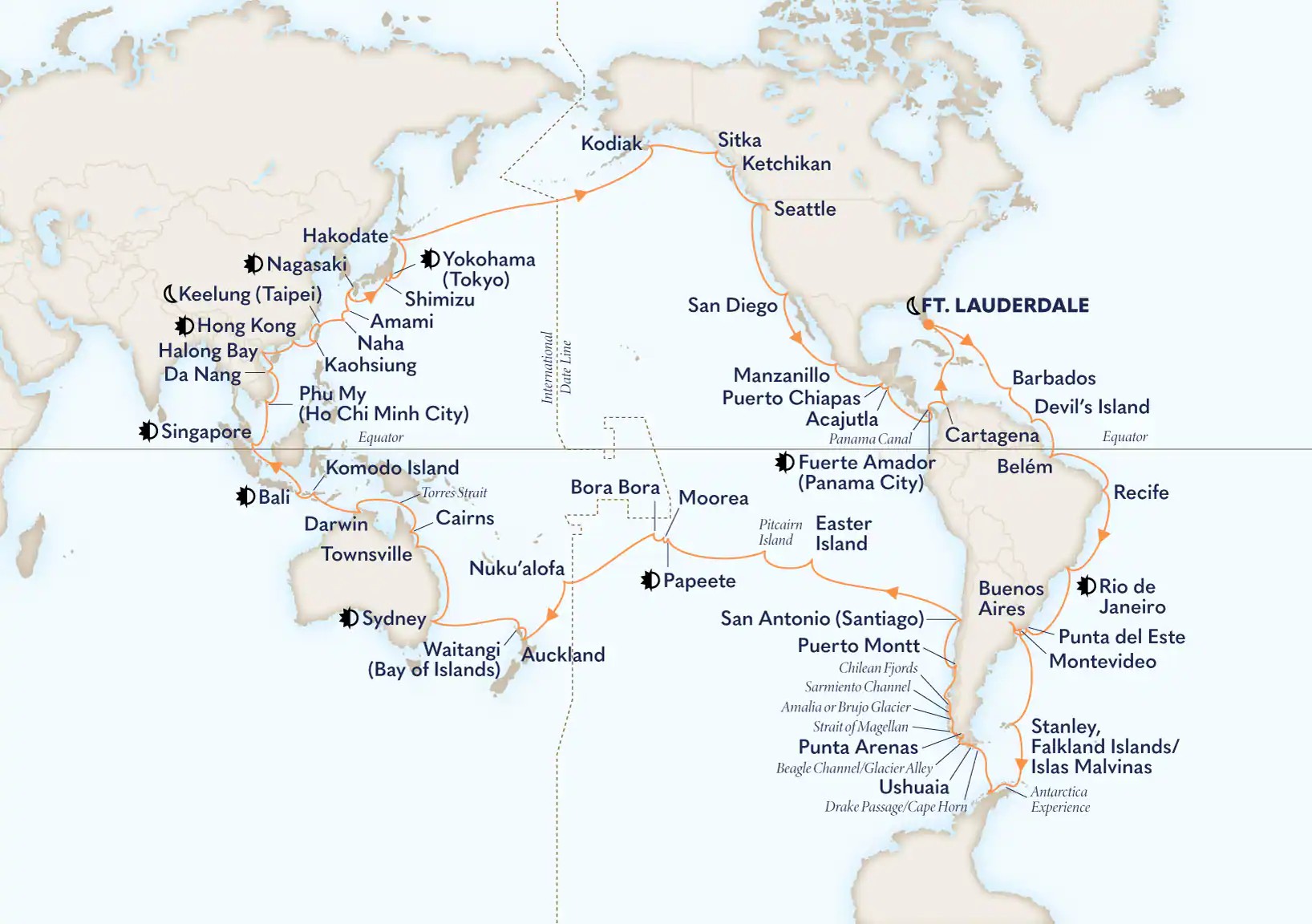
A Rooftop Paella Experience in Barcelona
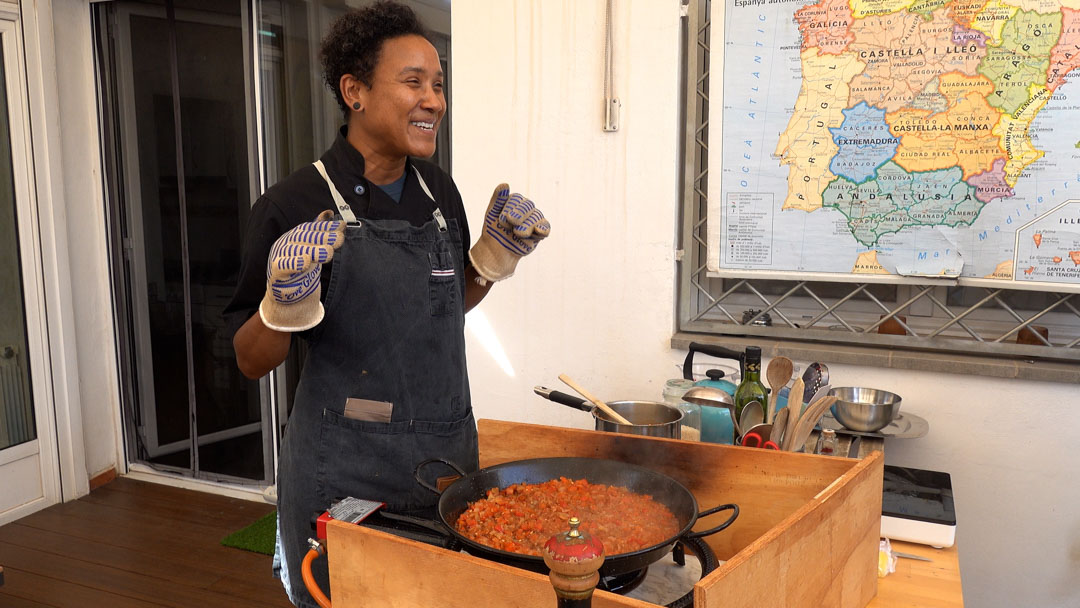
We spent the day with Nicole, a Barcelona chef, learning to cook traditional paella and Crema Catalana on her rooftop terrace overlooking the city
🥘 A Rooftop Paella Experience with Nicole – Traveling Spoon, Barcelona
A hands-on paella cooking class led by chef Nicole Hooks offered the perfect taste of Barcelona — from shopping the lively Mercat de Sants to preparing paella and Crema Catalana on her sunlit rooftop terrace.
20 October 2025, Barcelona
Once again, we booked a Traveling Spoon cooking experience more HERE— this time in Barcelona. We’ve taken several Traveling Spoon classes over the years and, while they can be on the pricey side, they’ve always proven to be excellent value — authentic, personal, and truly memorable.
We reserved this class back in June, choosing to make a traditional paella rather than seafood. Whenever possible, I look for an experience in a real home where we can participate rather than simply observe — and a visit to a local market is always a welcome bonus.
Meet Nicole
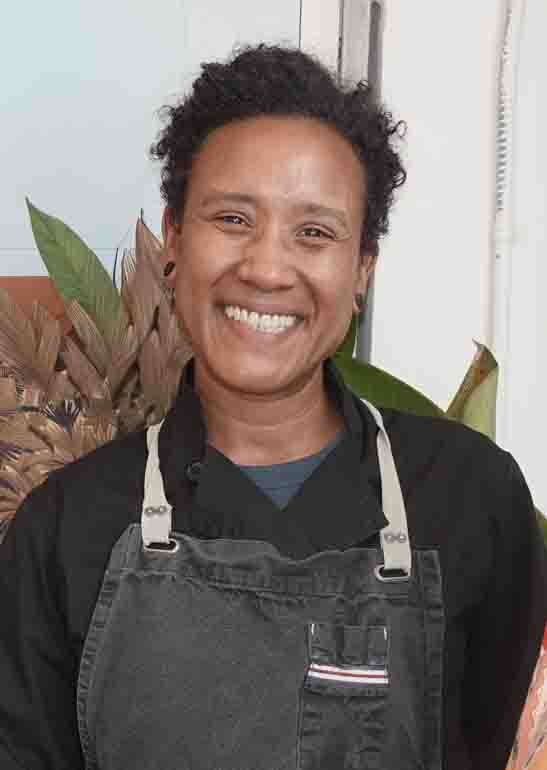
Nicole is an American who has lived in Spain since 2007. After fifteen years as an English teacher, she followed her passion for cooking and graduated from the Hofmann Culinary School, a Michelin-accredited academy in Barcelona, in 2020. She later completed a three-month rice course there in 2022 to deepen her understanding of Spain’s most famous rice dishes.
Nicole blends her love of teaching and cooking into one seamless experience — guiding guests through the preparation of traditional Spanish and Catalan dishes while sharing insights about local ingredients and regional traditions. She believes food brings people together no matter where they come from, and that warmth shines through in her classes.
Arrival and Market Visit
Our ship arrived before sunrise at Cruise Terminal D in Barcelona, and by 8 AM we were cleared to go ashore. We met our friends Kim and George at 9 AM and caught a taxi to Nicole’s apartment in the Sants-Badal neighborhood, where our class was scheduled for 10 AM.
The taxi cost about €25, which includes the €4.50 surcharge for pickups at the cruise terminal. We paid in cash, but most Barcelona taxis accept credit cards — just be sure to confirm that their card machine is working before you ride.
Arriving a little early, we found a cozy café nearby — Caffè Topolino — and I messaged Nicole to meet us there since it was on the way to the market. She arrived right on time, and soon we were off.

We waited here for Nicole since we arrived early – It was only €6.50 for four coffees
Rather than taking the direct route, Nicole led us along the Jardins de la Rambla de Sants, an elevated walkway built above the old railway line and modeled after New York City’s High Line. It was a lovely detour — quiet, leafy, and a great introduction to the neighborhood. Along the way, she pointed out local landmarks and described how the Sants district has preserved its strong community spirit over the years.
-

- Nicole explained the stories behind the many murals in the park
-

- A view of the elevated park
After about twenty minutes, we arrived at Mercat de Sants, a clean, modern, covered market filled with color and the hum of morning shoppers.
NOTE: Nestled in the Sants-Montjuïc district, the Mercat de Sants began as a bustling open-air market in the mid-19th century, serving the neighborhood’s booming industrial population amid railway expansion and textile factories. Designed by modernist architect Pere Falqués i Urpí in 1892 and inaugurated on March 23, 1913, its iron-and-glass structure with red-brick accents became a protected architectural gem, blending function with Catalan Art Nouveau style. Following a major renovation from 2009–2014, it now combines historic charm with modern amenities, including a kitchen classroom and sustainable cooling systems — ensuring it remains a vibrant hub for locals and visitors alike
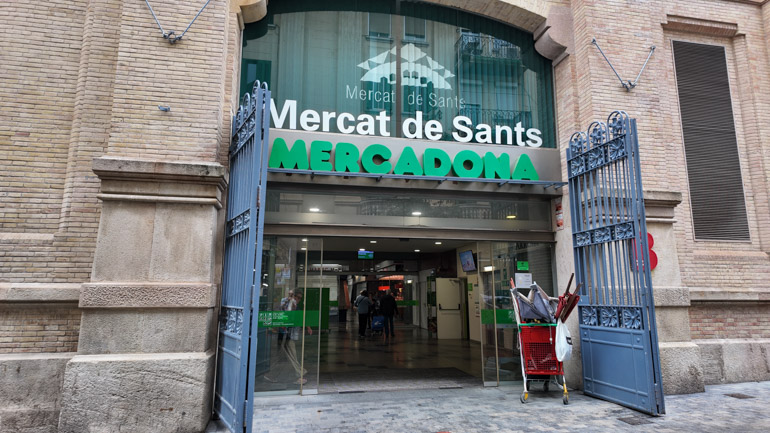
Mercat de Sants entrance. There is a supermarket inside “Mercadona”, which sells items not available in the main market area “
Nicole pulled her carro de la compra — the classic wheeled shopping trolley used by locals — and began gathering ingredients for our class.
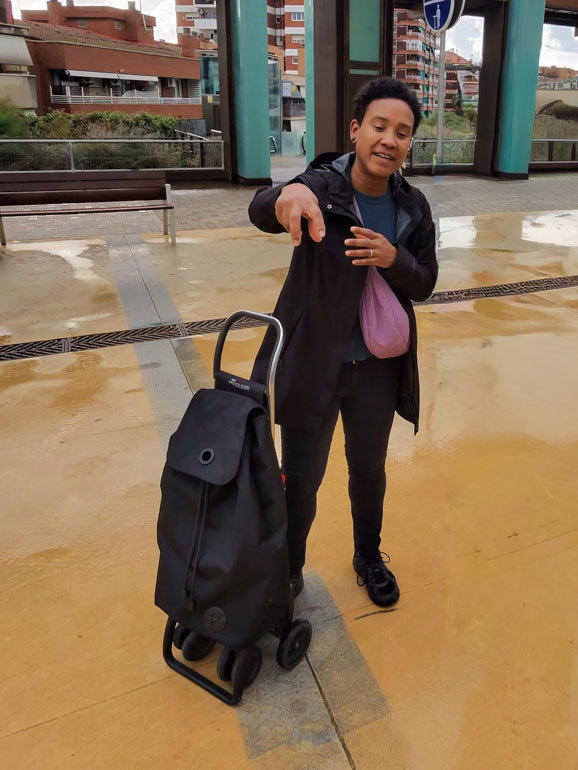
Nicole with her carro de la compra
We moved from stall to stall as she picked up everything needed for the paella: fresh vegetables, meat, and beans. Kim, who wanted to take some local olive oil home, asked for a recommendation, and Nicole suggested Mallafré Extra Virgin Olive Oil, made from 100% Arbequina olives. Kim bought two tins to take home, and I decided to get one as well — the perfect culinary souvenir.
-
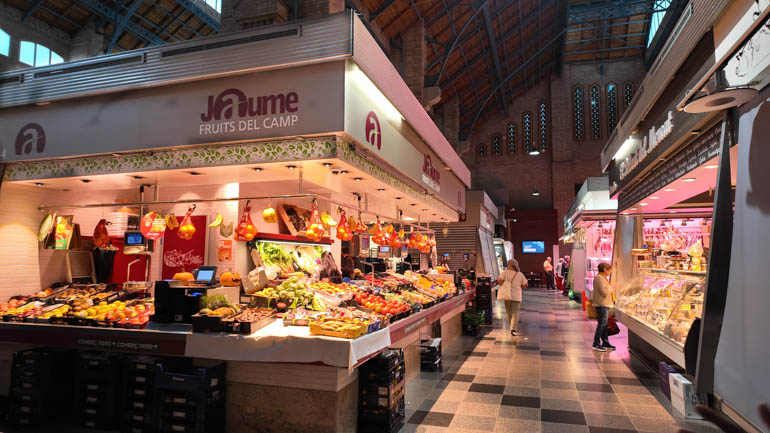
- Fruit and vegetable section
-

- Meat stall in the market
-

- We bought our olive oil here
Once her cart was full, we made our way back through the neighborhood toward her apartment. Along the way, we passed Club Esportiu Mediterrani, a longstanding local athletic club founded in 1931. It relocated to this former textile factory site in 1944 and has since grown into a modern complex serving over 10,000 members with sports, fitness, and family programs.

Inside the community athletic center
Cooking on the Rooftop
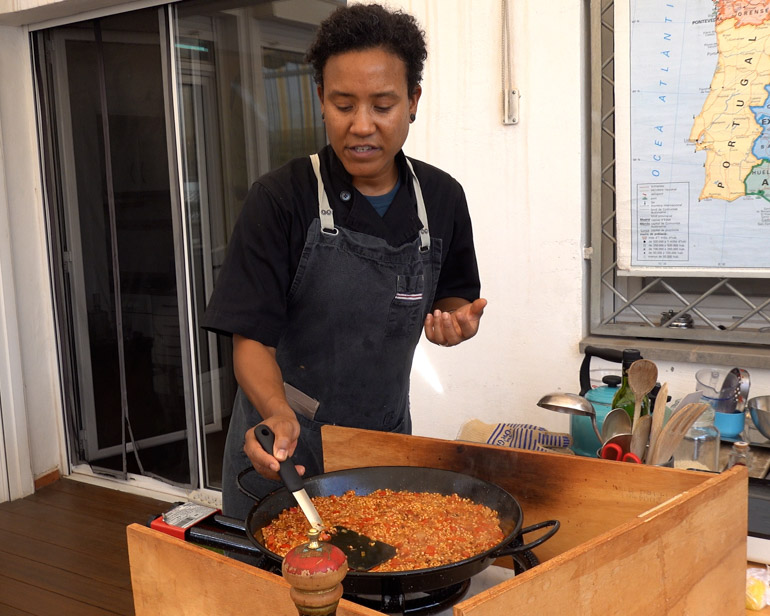
Nicole’s apartment is on the sixth floor and opens onto a beautiful rooftop terrace overlooking the surrounding rooftops. The setup was inviting — a large paella pan on a double-ring gas burner, two small induction hobs, and a long outdoor table shaded by a canopy. One wall featured a map of Spain, which she used throughout the lesson to highlight the origins of different ingredients.
-

- Nicole’s deck was bright and airy. We enjoyed our food at the table in the background
-

- The cooking area with a map of Spain
-

- We enjoyed some meat and cheese before we started
Before getting started, we enjoyed some cheese and olives with a glass of wine — the perfect prelude to an afternoon of cooking.
🍮 Crema Catalana for Dessert
Before we started the paella, Kim joined Nicole to prepare our dessert: Crema Catalana, Spain’s lighter, citrus-scented version of crème brûlée. Kim separated the eggs while Nicole infused milk with lemon peel and a cinnamon stick. Together they whisked the yolks, sugar, and cornstarch, then slowly added the milk, stirring constantly until the custard thickened.

Kim making the dessert
The custards were poured into small dishes and left to chill while we moved on to the paella.
Prepping the Ingredients
We moved over to the table and started prepping the vegetables:
- I chopped the onion.
- Kim handled the garlic.
- George grated the tomatoes.
- Judy trimmed the green beans.
Nicole showed us how to prep artichokes for the paella — peeling off the outer leaves and cutting them into quarters.
Once complete, we set the vegetables aside in bowls and moved back to the paella cooking area.
-

- George grating the tomatos
-

- Kim prepping the Garlic
Browning the Meat and Vegetables
We began by heating olive oil in the paella pan and browning the chicken and pork over the gas burner, seasoning lightly with salt. The sizzling meat quickly filled the air with an incredible aroma. Once browned, we set all the meat aside.
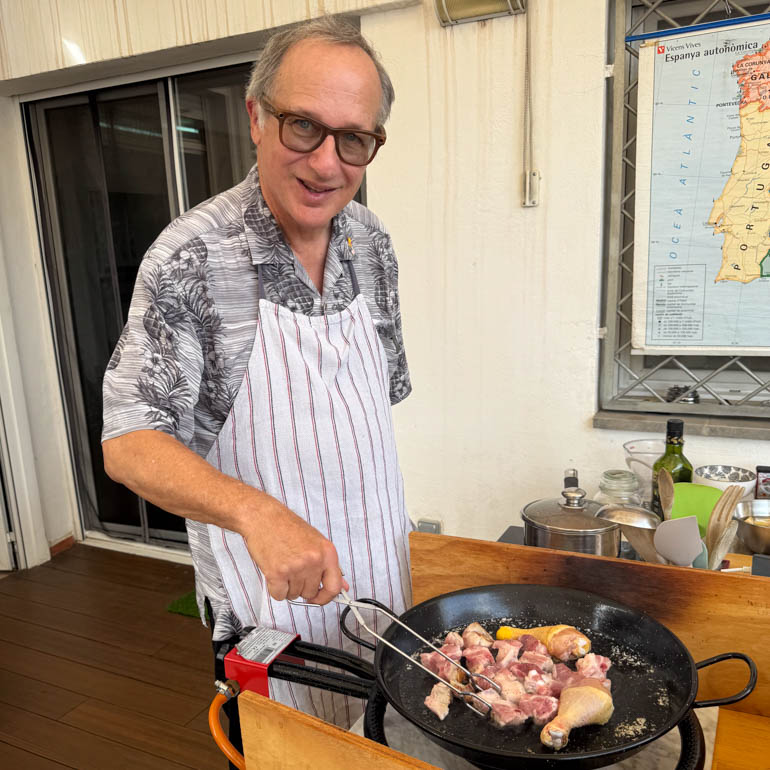
Pete browning the meat
Next came the jamón curado, artichokes, green beans, and Garrafo butter beans, which we sautéed briefly, then removed from the pan. This step built a rich foundation of flavor that would carry through the entire dish.
Building the Sofrito
With the prep work done, Nicole turned on the induction hob to prepare the sofrito, the slow-cooked base of onions, garlic, red peppers, and tomatoes. She started by heating olive oil, then added the chopped onions, stirring gently and occasionally adding a splash of water to keep them soft. After about 15 minutes, Nicole added the garlic, then the red pepper, and finally George’s grated tomatoes. The mixture simmered, thickening into a deep, flavorful paste — the heart of our paella.

Adding Olive Oil to the diced onions to start making the Sofrito
Bringing It All Together
With the sofrito ready, Nicole poured it back into the paella pan and stirred in the rice — one handful per person — coating every grain. She flattened the mixture slightly to toast the rice, turning it every few minutes. This step protects the grains, enhances texture, and adds a subtle nutty flavor.
-
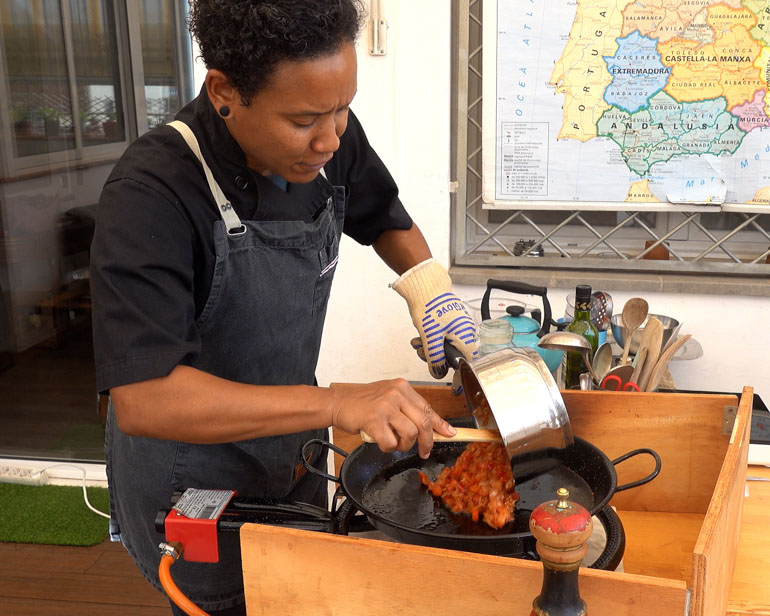
- Nicole adding the Sofrito
-

- Adding the rice
-
- Flattening and turning
Once the rice was toasted, she returned the par-grilled meats and vegetables to the pan, evenly arranging them. Then came boiling water — just enough to cover the rice — with extra hot water kept nearby for adjustments. Finally, she added the saffron infusion prepared earlier, then gave the pan a gentle shake to distribute everything evenly.

Adding the meat
From this point on, the rule was clear: no stirring. Nicole maintained a steady medium heat, occasionally rotating the pan by its handles to ensure even cooking. About halfway through, we tasted the broth and added a bit more salt to balance the flavors.

Almost done
After about twelve minutes, the sauce had thickened, and the rice had reached that perfect “chewy” texture. The bottom layer began forming the socarrat — the crisp, caramelized rice prized in every good paella. At this point, Nicole turned off the burner and covered the pan with a towel letting the paella rest while we got ready to eat.
The Meal and Farewell
We served the paella outdoors at the shaded table, accompanied by wine and plenty of conversation. The flavors were rich and layered — smoky rice, tender meat, and the gentle perfume of saffron tying everything together. It was one of those meals that invites lingering and laughter.

Nicole serving the Paella
After we finished eating, Nicole brought out the chilled Crema Catalanas. Each of us sprinkled sugar over the top and took turns using a small blowtorch to caramelize it. The sugar bubbled and hardened into a golden crust that cracked perfectly under our spoons — a sweet, fragrant finish to a relaxed, sunlit afternoon.

Flaming the dessert
After a bit more conversation, we thanked Nicole for the wonderful experience, said our goodbyes, and caught a taxi back to the ship — still savoring the memory of our rooftop cooking adventure.

Pete, Nicole and Judy
🎭 Evening Entertainment: Don the Ventriloquist
That evening’s show featured Don the Ventriloquist, who opened solo with quick humor before introducing his first puppet, Noseworthy. A few minutes later came his new character, a cranky buzzard named Buzzardo, whose sarcastic wit had the audience laughing instantly.
Don then set his puppets aside and walked into the audience with a “dead” microphone, pretending to interview passengers and providing both sides of the conversation himself. The illusion was perfect, and the crowd roared with laughter.


It was the perfect end to a fun, flavorful day in Barcelona. The ship stayed in port until 5 AM, giving us time to linger on deck and watch the city lights fade as we set sail.
This sounded wonderful..Glad you had such a good day
Yum, my mouth is watering.
Hi Pete and Judy,
I am catching up on all your posts and really enjoying them. It was lovely seeing you with Kim and George.
It brought back lovely memories for me.
Hugs,
Sandy and Bob